
















AI Can Make Content Faster. But Can It Make Your Brand Matter?
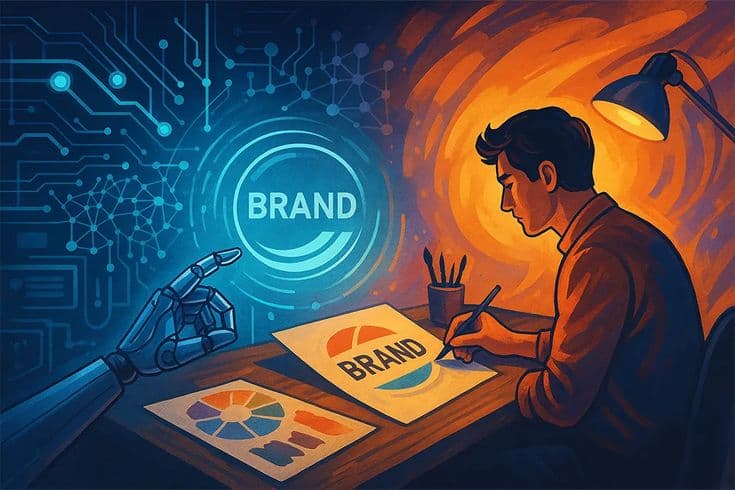
A social media manager used to lose hours doing work that had nothing to do with actual strategy. Writing ten caption variations. Turning one idea into five posts. Resizing creatives. Cutting down long videos. Adding subtitles. Researching competitors. Organising campaign notes. Repurposing content. Now, AI can do much of that work in minutes. And that creates a strange problem. If AI can create the content faster, what exactly is the social media manager supposed to do? The answer is more important than the technology itself. Because a machine can write a caption. It can generate a Reel. It can create an image. It can analyse a spreadsheet. It can suggest thirty content ideas before you've finished your coffee. But it still doesn't automatically know which idea your brand should pursue, why your audience should care, what your brand should sound like, or what you absolutely should not say. That's where the human still matters. The social media managers who thrive in 2026 won't necessarily be the ones who can produce the most content manually. They'll be the ones who know where AI genuinely adds value—and where human judgement needs to take over. At SocialUp Marketing, we don't see AI as a replacement for strategy, creativity or people. We see it as another tool within the workflow. The brand still comes first. The audience still comes first. The objective still comes first. Then AI enters the process to make the work faster, broader and more efficient. That distinction matters because the future isn't really: AI versus social media managers. It's: Social media managers who know how to use AI versus those who don't. And that is why the most useful AI tools in 2026 aren't necessarily the ones making the loudest claims. They're the ones that solve actual problems.
What Should You Decide Before You Open an AI Tool?
This sounds obvious. It isn't. One of the biggest mistakes social media managers make with AI is opening the tool before deciding what they actually need. They type: “Give me 10 Instagram Reel ideas for a skincare brand.” And then wonder why the answers sound exactly like every other skincare account. The problem isn't necessarily the AI. The problem is the brief. AI can only work with the context it receives. If you haven't established the brand's positioning, audience, objective, tone, product, platform and campaign requirements, you're effectively asking AI to make strategic decisions with incomplete information. And it will happily give you an answer anyway. That's where things become dangerous. The output may sound polished. It may even sound strategic. But polished doesn't mean correct. At SocialUp Marketing, we approach content from the opposite direction. First, understand the brand. Then understand the audience. Then establish the objective. Then understand what the content needs to accomplish. Then decide where AI can make the process better. That creates a much healthier workflow: Human decides → AI assists → Human reviews → Brand approves. Not: AI creates → Human copies → Everyone wonders why the content sounds generic. That difference is going to matter more as AI becomes increasingly capable.
1. ChatGPT: Your Researcher, Brainstorming Partner and First-Draft Machine
Let's start with the obvious one. OpenAI's ChatGPT has become far more useful to social media managers than simply generating captions. Its real value comes from versatility. You can use it to research an unfamiliar industry, structure a campaign brief, brainstorm content directions, analyse audience information, organise research, develop scripts, compare messaging approaches and turn scattered notes into something usable. It can also help with uploaded documents and other forms of information, making it useful when social media managers are working with campaign briefs, research, spreadsheets, brand guidelines or existing content. But the quality of the output depends heavily on the quality of the context you provide. Compare: “Give me five Instagram captions for a skincare brand.” with: “This is a science-backed skincare brand targeting Indian consumers aged 22–35 who are concerned about acne and post-acne marks. The brand tone is knowledgeable but approachable, avoids exaggerated claims and wants to build trust rather than sound promotional. Here are five previous captions that performed well. Develop three new directions that sound distinct from the existing content.” Those are completely different assignments. The second gives the AI something to work with. And ChatGPT can be particularly useful when you stop treating it as a vending machine for finished content and start treating it as a thinking partner. Ask it to challenge an idea. Ask it to identify weaknesses. Ask it to generate opposing creative directions. Ask it to simplify something. Ask it to turn one campaign idea into multiple content formats. Ask it what your audience might misunderstand. That is much more powerful than simply asking: “Write me a caption.” And yes, it can write the first draft. But remember: A first draft is not a final brand voice. Someone still needs to decide whether the words sound like your brand.
2. Canva AI: When Creative Production Needs to Move Faster
Canva has moved considerably beyond being a simple drag-and-drop design platform. Its AI features can help with ideation, content generation, editing and speeding up parts of the design workflow. For social media managers, that's useful for one simple reason: Speed. Imagine you're developing a campaign concept and want to explore several visual directions. You might need: Different compositions. Different backgrounds. Different layouts. Different visual treatments. Different creative references. AI can help you test those directions much faster than manually creating every variation from scratch. It can also help with repetitive design adjustments and visual editing. And that matters when social media teams are producing content across multiple platforms and formats. But there is an important distinction. Faster design isn't automatically better design. If the strategy behind the content is weak, AI simply allows you to produce weak content faster. And that's not innovation. That's acceleration without direction. A social media page can have beautiful typography, polished graphics and consistent colours while still communicating absolutely nothing. That's how you end up with an Instagram feed that looks like a random Pinterest board with a logo attached. Use Canva AI to explore and execute ideas. Don't use it to avoid having an idea in the first place.
3. CapCut: The Short-Form Video Workhorse
If your social media role involves Reels, TikToks, Shorts or other short-form video, CapCut deserves serious attention. Its AI-assisted features can help with editing, captions, transcription, clipping, voiceovers, visual generation and other parts of the short-form production process. And this is where AI can genuinely save social media managers a ridiculous amount of time. Think about what goes into one Reel. You shoot 30 minutes of footage. You need 25 seconds. Now someone has to: Find the useful section. Cut the pauses. Remove filler. Create the opening. Add captions. Adjust pacing. Add visual elements. Format it correctly. Possibly create multiple versions. That process can take significantly longer than the actual filming. AI-assisted editing can reduce some of that repetitive work. CapCut can also support earlier parts of the creative process, including developing video ideas and storyboards. That makes it more than an editing tool. It can become part of the ideation-to-execution workflow. But there's a major warning. Don't generate AI video simply because you can. Suppose a skincare campaign is built around genuine customer experiences. A synthetic person applying a serum may look flawless. It may also completely undermine the campaign. If authenticity is the selling point, artificial perfection can become the problem. AI should solve a production challenge. It shouldn't manufacture something that makes your audience trust the brand less.
4. Adobe Firefly: For More Controlled Generative Creative
Adobe's Firefly is particularly relevant for teams already working within the Adobe ecosystem. It supports generative workflows across areas such as imagery, video and creative editing. For social media teams, its biggest advantage isn't simply creating an impressive AI image. It's creative experimentation. Imagine a campaign concept that needs: A new environment. A different background. A conceptual product setting. A visual mock-up. A campaign moodboard. A scene that would be expensive to produce physically. Instead of immediately committing to a full production, AI can help the creative team explore what the idea could look like. That can make the early creative process considerably more efficient. And there is a larger strategic advantage here: AI can make experimentation cheaper. When experimentation costs less, creative teams can explore more possibilities before deciding what deserves actual production. That's valuable. But the same rule applies. A generated visual can be technically impressive and strategically useless. Before asking, “Does this look good?” Ask: “What is this communicating?” Then ask: “Does that communication belong to this brand?” That's the difference between visual generation and creative direction.
5. Runway: When Your Ideas Need More Than Traditional Video
Runway becomes particularly interesting when social media teams want to experiment with AI-native video. Its tools can be used for generating and transforming video and exploring visual concepts that might otherwise require more complicated production. That can be useful for: Concept videos. Campaign explorations. Mood pieces. Transitions. Product environments. Visual storytelling. Storyboards. Creative experiments. And the important thing is that AI video doesn't necessarily have to replace live-action production. It can sit alongside it. A social media team might film the real product, the real creator and the real environment while using generative tools for specific visual elements that would otherwise be difficult or expensive to create. That's where AI starts becoming genuinely interesting. Not: “Let's replace everything with AI.” But: “What can AI help us create that would otherwise be difficult?” That is a much better creative question.
6. Midjourney: For Visual Concepts and Creative Exploration
Midjourney can be particularly useful when the goal is visual exploration. Imagine you're building a luxury fashion campaign. Before production, you want to explore: Lighting. Composition. Styling. Set design. Mood. Editorial direction. Visual storytelling. Instead of explaining the idea entirely through words, you can create visual references that help everyone understand the direction. That can make creative conversations significantly faster. The same applies to beauty, food, travel, architecture and lifestyle campaigns. But there is a trap here. Beautiful AI imagery can become addictive. You generate something gorgeous. Then another. Then another. Suddenly you're developing an entire campaign around the image rather than the idea. That's backwards. The image should communicate the concept. The concept should serve the brand. And the brand should serve a business objective. A beautiful visual is not a strategy. It is a tool within one.
7. Gemini: Particularly Useful for Google-Heavy Workflows
Google's Gemini becomes particularly useful when your social media workflow already lives inside Google's ecosystem. For teams working across tools such as Gmail, Drive and Sheets, AI can help with brainstorming, information organisation, summarisation, content creation and analysis. And this highlights an underrated part of social media management: Information management. A social media manager may be dealing with: Client emails. Campaign briefs. Meeting notes. Content calendars. Research documents. Performance reports. Product information. Competitor notes. Creator details. Approval feedback. The problem isn't always creating content. Sometimes the problem is finding the information you need quickly enough to create the content properly. That's where AI-assisted organisation can make a meaningful difference. Because productivity isn't just: “How quickly can I make a Reel?” It is also: “How quickly can I understand what I need to make?”
8. Claude: A Useful Second Brain for Long-Form Thinking
Anthropic's Claude can be particularly useful for social media managers dealing with long documents, extensive research, writing refinement and structured thinking. It supports document and image analysis, Projects and other workflows designed around working with larger amounts of context. That can make it useful for: Campaign knowledge bases. Brand documents. Messaging frameworks. Long research documents. Creative briefs. Content strategy. Writing refinement. Audience analysis. Organising messy ideas. Again, the point isn't to declare one AI model the permanent winner. That debate is often far less useful than people think. Different tools perform differently depending on the task. You don't need loyalty to software. You need the right tool for the job.
Why the “Best AI Tool” Doesn't Really Exist
This is where social media managers can get completely distracted. Every few weeks, there is a new AI platform. A new image generator. A new video model. A new writing assistant. A new automation platform. A new tool claiming it will replace five other tools. And suddenly, you're spending more time learning AI platforms than actually managing social media. That's backwards. The objective isn't to collect AI tools. The objective is to build a better workflow. If ChatGPT handles your research. Canva handles your design. CapCut handles your short-form editing. And your existing workflow handles everything else effectively— You may already have enough. You don't need 17 subscriptions because someone on LinkedIn called them “essential.” Technology should reduce friction. If a tool creates more work than it removes, it isn't improving your workflow. It's becoming part of the workload.
What Should AI Never Take Away From a Social Media Manager?
There are certain responsibilities AI can assist with but should not blindly own. Brand understanding: AI can process brand information. It cannot replace human judgement about what the brand should mean to people. Audience understanding: AI can identify patterns in data. It cannot replace genuine understanding of why people behave the way they do. Creative judgement: AI can generate 30 ideas. Someone still has to decide which one is worth making. Strategy: AI can suggest possible approaches. It shouldn't independently determine the entire marketing direction of a brand without meaningful human oversight. Taste: This one is harder to explain. You can give AI references. You can give it examples. You can give it instructions. But the ability to look at something and instinctively understand “this feels wrong for the brand” remains incredibly valuable. And as AI-generated content becomes more common, that judgement may become even more valuable.
Does AI Actually Understand Your Brand?
No. Not automatically. It understands the information you give it. That's an important distinction. Give it: A vague description. A generic audience. A product name. And one sentence about the tone. You'll probably get generic content. Give it: Brand positioning. Audience research. Tone of voice. Product details. Past campaigns. Successful content. Failed content. Competitor references. Words the brand would never use. Campaign objectives. Platform requirements. Customer insights. Now the AI has context. And context changes everything. This is why effective prompting isn't really about discovering a magical sentence that makes AI “think better.” It's about giving it enough strategic information to produce something useful. The better the brief, the better the assistance. But even then, the final decision still belongs to the social media manager.
How Do You Stop AI From Making Every Brand Sound the Same?
Here's the irony. AI can make content production faster. But if everyone uses it in exactly the same way, brands can start becoming remarkably similar. The same hooks. The same sentence structures. The same polished vocabulary. The same “Here are five reasons why…” openings. The same motivational conclusions. The same glossy visuals. The same artificial enthusiasm. And suddenly, every brand sounds like it was written by the same person sitting in the same room. That's not innovation. That's digital beige. The solution isn't to stop using AI. It's to use AI differently. Use it to explore unusual directions. Use it to challenge predictable ideas. Use it to generate possibilities you wouldn't have considered. Use it to find weaknesses in your first idea. Then apply human judgement to make the final work distinctive. AI should expand your creative range. It should not flatten your brand identity.
Where Do UGC and Influencer Campaigns Still Need Humans?
This is where the difference becomes especially obvious. AI can help with: Scripts. Hooks. Content concepts. Creator research. Brief development. Content analysis. Performance summaries. But authentic UGC still depends on an actual person being able to communicate the product convincingly. Imagine a skincare campaign where the entire proposition is based on genuine experience. You could generate a beautiful AI video of someone applying the product. But the synthetic perfection might undermine the very authenticity the campaign needs. At SocialUp Marketing, creator selection is therefore strategic. The question isn't simply: “Who has the most followers?” It's: Who has the right audience? Who communicates naturally? Who is comfortable on camera? Whose lifestyle fits the product? Who can deliver the story convincingly? Who can make the brand feel natural within their content? AI can support parts of that process. It cannot replace the judgement required to decide whether someone actually belongs in front of the brand. And that's the broader lesson: Automation can accelerate selection. It cannot replace understanding.
What Should a Social Media Manager Actually Automate?
A simple rule works surprisingly well: Automate repetition. Protect judgement. If AI can accurately summarise a research document, use it. If it can turn a long video into multiple clips, use it. If it can remove repetitive editing work, use it. If it can generate several creative directions for comparison, use it. If it can organise information, use it. If it can help repurpose existing content, use it. If it can test different hooks quickly, use it. But don't outsource the decisions that define the brand. That includes: What the brand stands for. Who it wants to attract. What it should sound like. What it shouldn't say. Which trends it should ignore. Which ideas are worth pursuing. What the audience actually needs. And what success looks like. That's where the social media manager earns their value.
How Is AI Changing the Actual Job of a Social Media Manager?
This is perhaps the most positive part of the entire shift. A good social media manager shouldn't spend hours doing work that a machine can complete accurately in minutes. If AI can help summarise research, let it. If it can create five rough concepts, use them. If it can remove repetitive editing, automate it. If it can turn one long-form asset into multiple short-form pieces, use it. If it can organise campaign information, let it. Then take the time you've saved and put it somewhere more valuable. Into strategy. Into audience research. Into creative development. Into client communication. Into campaign thinking. Into performance analysis. Into understanding what worked and why. Into finding the next opportunity. AI should make social media managers more human where human thinking matters most. That is the real opportunity.
How Does SocialUp Marketing Use AI?
At SocialUp Marketing, AI is best treated as a tool inside the workflow—not the workflow itself. Different requirements need different approaches. If a task benefits from AI, use it. If a task requires human creativity, bring in humans. If it requires genuine creator experience, work with creators. If it requires strategic judgement, let strategists make the decision. The goal isn't to maximise the amount of AI involved. The goal is to maximise the quality of the work. That distinction also protects something SocialUp considers fundamental: The brand identity stays intact. The format can change. The platform can change. The audience segment can change. The creative execution can change. The content style can evolve. But the brand shouldn't suddenly become whatever an AI tool generated that afternoon. Technology should adapt to the brand. The brand should never be forced to adapt to the technology.
Which AI Tools Should You Actually Start With in 2026?
If the sheer number of AI tools feels overwhelming, don't start by trying all of them. Start with your workflow. For research, strategic thinking, brainstorming and first drafts, ChatGPT is one of the most versatile options. For fast design and AI-assisted visual production, Canva is highly practical. For short-form video editing and social-first production, CapCut is particularly useful. For controlled generative creative work, especially within an Adobe workflow, Adobe Firefly is worth exploring. For AI-native video experimentation, Runway is a strong option. For visual concept development and image generation, Midjourney can be extremely powerful. For teams already working heavily within Google Workspace, Gemini can make information and productivity workflows more efficient. For long-form thinking, document analysis and writing refinement, Claude can be a valuable second brain. But don't interpret this as a checklist. You don't need every tool. You need the tools that solve your problems. Tool collecting isn't a social media strategy.
Is Prompting Really the Most Important AI Skill?
Not quite. People love talking about prompt engineering. But for social media managers, an arguably more valuable skill is knowing what to ask in the first place. Can you identify the actual problem? Can you explain the audience? Can you define the campaign objective? Can you distinguish an awareness post from a conversion post? Can you tell when a trend doesn't fit the brand? Can you recognise a generic AI-generated idea? Can you tell when something sounds polished but says absolutely nothing? Can you recognise when a technically impressive visual is strategically useless? Can you challenge the AI's recommendation instead of accepting it because it sounds confident? That's expertise. And there is an interesting paradox here. As AI gets better at producing content, human judgement becomes more valuable. When everyone can generate 20 ideas in 30 seconds, the advantage shifts to the person who knows which idea deserves to exist. That's the skill worth developing.
What Happens If Everyone Starts Using the Same AI Tools?
The tools themselves won't create differentiation. The way people use them will. Two social media managers can use the exact same AI model and produce completely different work. Why? Because the input is different. The strategic understanding is different. The taste is different. The audience knowledge is different. The brand knowledge is different. The questions are different. The editing is different. And the judgement is different. That's why AI doesn't necessarily make creativity less important. In many ways, it makes creative judgement more important. When production becomes easier, ideas become the scarce resource. And when ideas become easier to generate, good ideas become harder to identify. That's where experienced social media managers can create an advantage.
The Bigger Shift: AI Is Removing Busywork, Not Responsibility
This is probably the healthiest way to think about AI in social media. AI can remove some of the repetitive work. It can make research faster. It can make production more efficient. It can make experimentation cheaper. It can make repurposing easier. It can make information easier to organise. But responsibility still sits with the person managing the brand. If AI creates a terrible caption, someone has to catch it. If AI generates a misleading claim, someone has to reject it. If AI produces an off-brand visual, someone has to say no. If AI suggests a trend that damages positioning, someone has to stop it. If AI creates something technically impressive but completely irrelevant, someone has to recognise that. That's not a weakness of AI. That's the reason humans are still necessary. The tool can produce. The strategist has to decide.
Let AI Do More. Just Don't Let It Think for Your Brand.
AI isn't going away. And honestly, social media managers shouldn't want it to. Use it to research faster. Use it to brainstorm more broadly. Use it to explore creative directions. Use it to edit faster. Use it to organise information. Use it to repurpose content. Use it to test ideas. Use it to eliminate repetitive work. Use it to create more time for the work that actually requires a human brain. But don't let convenience become complacency. Because the danger isn't that AI will suddenly replace every social media manager. The bigger danger is that social media managers will start producing content that looks efficient but feels identical. The same hooks. The same captions. The same visuals. The same trends. The same personality. The same everything. That's not what AI should create. The best use of AI should make your work more thoughtful, not more generic. At SocialUp Marketing, that's why technology remains part of the process rather than becoming the process itself. We still begin with the brand. We still understand the audience. We still establish the objective. We still decide what the content needs to communicate. We still choose the right creative direction. And then we use technology wherever it can make execution smarter, faster or more efficient. Because AI can generate the post. It can generate the Reel. It can generate the image. It can generate the caption. It can even generate ten alternatives before you've finished deciding what you're having for lunch. But it doesn't automatically know which one deserves to exist. It doesn't know what your audience will genuinely care about. It doesn't know which trend your brand should ignore. It doesn't know what your brand should never say. And it doesn't know why your brand deserves to be remembered. That's still the social media manager's job. So don't compete with AI by trying to do everything it can already do. Direct it. Challenge it. Edit it. Use it. Make it work harder. And then spend the time it saves doing the thing no tool can automate completely: thinking better about people, brands and what is actually worth saying. Because in 2026, the winning social media manager won't be the person who uses the most AI. It will be the person who knows exactly when to use it—and exactly when not to.