















Before They Trust Your Skincare, They Have to Trust Your Brand
A customer can fall in love with a lipstick in three seconds. Skincare is different. Nobody sees a serum on Instagram and immediately thinks, “Looks good. Let me put that on my face.” Before they buy, they start asking questions. Will it actually work? Is it right for my skin? Can I trust the brand? Are the results real? Is the person recommending it credible? Is the price justified? Does this clinic actually know what it is doing? And that makes skincare, aesthetics and beauty some of the most trust-dependent categories on social media. The challenge is that many brands still approach Instagram as though aesthetics alone can do the selling. A beautiful product shot. A trending audio. A creator holding a serum. A perfectly lit treatment room. A polished caption. “Shop Now.” And then they wonder why the content isn't translating into meaningful growth. Because skincare isn't simply something people look at. It's something they put on their skin. A treatment isn't simply something they book. It's something they trust a professional to perform. And a beauty purchase isn't always just about the product. It can be connected to confidence, appearance, self-image, routine and personal concerns. That makes the job of social media much bigger than generating views. For skincare clinics and beauty brands, social media has to establish expertise, reduce uncertainty, demonstrate value, showcase real experiences, answer questions and make the audience feel understood. At SocialUp Marketing, we don't begin with, “What Reel should we post this week?” We begin with the brand. Who is it speaking to? What does it offer? What does the audience need to believe? What problem does it solve? What is the objective? And what kind of perception does the brand need to create? Because another beautiful Reel isn't automatically the answer. The right story, delivered by the right person, in the right format, to the right audience, for the right objective is. And that is what makes social media marketing for skincare and beauty fundamentally different.
Why Has Social Media Become So Important for Skincare and Beauty Brands?
Think about how people used to discover skincare. A dermatologist recommended something. A friend mentioned a product. Someone spotted it in a store. A magazine featured it. A beauty expert talked about it. Now, social media has compressed all of those discovery and research moments into one environment. People discover ingredients through Instagram. They watch skincare routines on YouTube. They see creators demonstrating products. They read comments before purchasing. They search for reviews. They compare brands. They look at a clinic's Instagram before deciding whether to book an appointment. They even use social media to determine whether a brand feels credible enough to trust. In other words, your social media presence has become part of the customer's research process. That changes the question brands should be asking. Not: “Does our Instagram look good?” But: “What does someone actually understand about our brand after spending five minutes on our page?” Do they understand what you do? Do they know who you are for? Do they understand your expertise? Can they see real experiences? Do they know what makes you different? Can they find answers to their concerns? Do they understand what your product or treatment actually does? Most importantly, do they feel more confident about choosing you? Because there's a huge difference between a social media account that looks active and one that actually helps move a potential customer closer to a decision.
What Should Skincare Content Establish Before It Tries to Sell? Credibility. Not every skincare post needs to sound clinical or technical. But every brand should communicate that it understands its category and respects the intelligence of its audience. Educational content can explain common concerns. Expert-led videos can establish authority. Product demonstrations can improve understanding. Founder-led content can communicate the thinking behind the brand. UGC can show how products fit into real routines. Reviews can provide social proof. Behind-the-scenes content can create transparency. Customer experiences can make the brand feel more human. These different formats perform different jobs. And that's important because not every interaction needs to end with a purchase. Imagine someone has never heard of your skincare brand. You immediately show them a product and say: “Shop now.” Why should they? They don't know the brand. They don't understand the product. They don't know whether the claim is credible. They haven't been given a reason to care. Now change the journey. The first piece of content addresses a concern they recognise. The next explains something they didn't understand about that concern. Another introduces the brand's approach. A creator demonstrates the product naturally. A customer shares their experience. The brand answers a common objection. Now the eventual CTA has context. It doesn't feel like a sales interruption. It feels like the next logical step. That's customer-journey thinking—and it's one of the reasons SocialUp builds content around objectives rather than treating every post as a sales opportunity.
Should Skincare Brands Focus on Education or Entertainment? Both. But neither should exist without a purpose. Skincare audiences can be incredibly information-driven. They want to know about ingredients, routines, concerns, formulations, application and realistic expectations. But that doesn't mean they want to attend a chemistry lecture while scrolling Instagram. The challenge is turning useful information into content people actually want to consume. Instead of saying: “Our serum contains X ingredient.” Ask the more relevant question: “Why does this ingredient matter if you're dealing with this particular concern?” That shift changes everything. The information becomes useful rather than promotional. And when educational content is delivered well, the brand doesn't have to force itself into every sentence. Teach. Explain. Simplify. Build curiosity. Then show where your product or service naturally fits. At SocialUp, that's an important distinction. A skincare brand shouldn't become either a lecture hall or a catalogue. It should become a useful presence in the customer's feed. Something worth watching. Something worth saving. Something worth sharing. Something worth returning to. And eventually, something worth trusting.
Why Does UGC Work So Well for Skincare?
Skincare is personal. People want to know what a product looks like outside the perfectly controlled environment of a brand photoshoot. They want to see texture. Application. Routine. Usage. Experience. They want to see another person actually use the product. That's where UGC can create a powerful bridge between polished brand communication and everyday experience. Instead of a brand saying: “This serum is easy to incorporate into your routine,” a creator can show what incorporating it actually looks like. The audience gets context. The product becomes less abstract. And the recommendation can feel more relatable. But here's where brands often get UGC wrong. UGC isn't automatically effective just because someone filmed themselves holding your product. The creator matters. The script matters. The hook matters. The storytelling matters. The product demonstration matters. The audience matters. And the connection between the creator and the brand matters. At SocialUp Marketing, creator selection isn't based simply on follower count. We consider the creator's audience, lifestyle, communication ability, camera presence, editing style and natural content language. Because the goal isn't: “Find us a creator.” The goal is: “Find someone who can make the right audience believe this product belongs in their world.” That's a much stronger brief.
What Does a Strong Skincare UGC Campaign Actually Look Like?
Consider SocialUp's work with FixDerma. The objective wasn't simply to put skincare products into creators' hands and generate a collection of videos. The content needed to communicate product efficacy while remaining authentic and relatable. SocialUp collaborated with 22 carefully selected UGC creators and developed 22 core videos. Then, each video received three different hook variations, creating a total of 66 video assets. That distinction matters. The creative concept wasn't treated as one fixed piece of content. It was developed into a broader asset system. One hook could begin with a relatable problem. Another could lead with a personal experience. Another could create curiosity. The product story remained consistent while the entry point changed. The creative direction focused on authentic product experiences, relatable routines and before-and-after journeys. The result was a larger library of creator-led assets designed to communicate the products in multiple ways. But the bigger lesson isn't simply: “UGC works.” It's this: UGC becomes far more valuable when the creator, product, audience and story are strategically aligned. A random creator holding a serum is content. A carefully selected creator showing why that serum matters to someone like the viewer is communication. And there's a significant difference between the two.
What Role Does Influencer Marketing Play for Beauty Brands?
Influencer marketing can be powerful for beauty brands, particularly when the goal is to introduce a product or brand to an audience that doesn't know it yet. Influencers can create awareness. They can make a new product feel familiar. They can give a launch a human face. They can provide social proof. And they can help a relatively unfamiliar brand enter the consideration set of potential customers. But influencer marketing becomes much less effective when the only selection criterion is: “How many followers do they have?” A creator can have hundreds of thousands of followers and still be completely wrong for your campaign. The audience may not match. The communication style may not fit. The creator may not be able to explain the product properly. Their content may conflict with your positioning. Or their recommendation may simply not feel believable. Consider SocialUp's work with Sacred Kosmetics, an Indian skincare brand combining Ayurveda, J-Beauty and K-Beauty. The brand was launching two hero products: a Vitamin C Serum and an Anti-Ageing Serum. The objective wasn't simply to get influencers to post. The campaign needed to introduce the products, communicate their positioning, build awareness and create social proof around a distinctive proposition. SocialUp collaborated with 10 carefully selected influencers, generating 10 Instagram videos and more than 1 lakh collective reach. The content communicated product benefits, ingredient stories and usage experiences while maintaining the aspirational quality expected from the category. The important part wasn't simply the number of influencers. It was why those influencers were selected. Ayurveda + J-Beauty + K-Beauty is a distinctive proposition. The creators needed to be capable of communicating that positioning rather than merely displaying a bottle. That's the difference between influencer placement and influencer strategy.
How Should Skincare Clinics Approach Social Media Differently?
A skincare clinic isn't selling a serum. It is selling expertise, experience, confidence and a service outcome. And the customer's perceived risk can be considerably higher. Someone considering a treatment may be thinking: Will it hurt? Is this treatment right for me? Who will perform it? What will happen during the appointment? What should I expect afterwards? How long will recovery take? Is this clinic credible? Is the treatment worth the cost? A photograph of a beautiful reception area won't answer those questions. The clinic needs to communicate the experience behind the service. That can include expert-led videos. Treatment explainers. Frequently asked questions. Appropriate patient experiences. Behind-the-scenes content. Staff introductions. Process demonstrations. Pre- and post-treatment guidance. Educational content around common concerns. Content explaining what someone can realistically expect. The objective is simple: Make the unfamiliar feel familiar. When someone is considering a treatment, uncertainty can become one of the biggest barriers to action. Your social media should remove as much unnecessary uncertainty as possible before they ever walk through the clinic door.
Why Should Clinics Put Their Experts in Front of the Camera?
People trust people. That doesn't mean every dermatologist needs to become a social media influencer. It means expertise becomes more tangible when people can actually see and hear the person behind it. A dermatologist explaining a concern can establish authority. A doctor explaining a treatment can reduce anxiety. A founder discussing the clinic's philosophy can communicate purpose. A professional walking through the treatment process can make the experience feel less intimidating. But there is an important balance. Credibility shouldn't be sacrificed for entertainment. A trend that works brilliantly for a fashion brand may make a premium clinic look unserious. A comedic format that works for a food brand might weaken the positioning of an aesthetic practice. And this is where brands need to stop treating every viral format as an obligation. At SocialUp, trends are tools—not commandments. If a trend fits the brand's personality, audience and positioning, use it. If it doesn't, reinterpret it. Or simply leave it alone. Instagram may reward novelty. Your brand still has to protect its identity.
How Should Beauty Brands Choose the Right Creators?
Follower count is one of the easiest numbers to see. It is also one of the easiest numbers to overvalue. A creator with 500,000 followers isn't automatically more valuable to a skincare brand than someone with 30,000. What matters is whether the right people are listening. Consider: Who is their audience? How do they communicate? Are they comfortable speaking on camera? What does their content naturally look like? Does their lifestyle make the product believable? Can they explain the product clearly? Does their audience actually engage with their recommendations? Does their visual language fit the brand? Most importantly: Would their audience believe them talking about skincare? That's the question. The biggest creator isn't necessarily the strongest creator. The strongest creator is the one who can create credible relevance between the brand and the audience. Because you don't need the largest audience. You need the right audience to listen.
Why Should Beauty Brands Stop Treating Instagram Like a Product Catalogue?
Because nobody opens Instagram hoping to browse your inventory. People come for entertainment. Information. Inspiration. Relatability. Stories. People. Experiences. Your products absolutely need to appear. But they shouldn't be the only thing your account communicates. Imagine one skincare account that looks like this: Serum. Cleanser. Moisturiser. Discount. Serum. New launch. Offer. Another product. Now imagine another account: A dermatologist explaining a common concern. A creator demonstrating a routine. A founder explaining why the product was created. A customer sharing an experience. An ingredient explained simply. A behind-the-scenes look at the brand. A product demonstration. A relatable skincare problem. A community conversation. The second account feels like a brand. The first feels like a catalogue. And that distinction matters. Social media isn't simply the shelf where you display your products. It is where you build the world around them.
How Can Storytelling Help Beauty Brands Create Demand?
A product becomes more relevant when people can see where it belongs in their lives. Consider the difference between: “Here is our moisturiser.” and: “Your skin feels completely different after a long day of Delhi heat, pollution and air conditioning. Here's what your evening routine could look like.” The product hasn't changed. The context has. And context creates relevance. Good storytelling doesn't manufacture an artificial need. It identifies a genuine concern, desire or situation and helps the audience recognise themselves within it. That could mean showing the frustration of dealing with a recurring skincare concern. It could mean showing how a product fits into a busy morning. It could mean showing the experience of preparing for an event. It could mean demonstrating a treatment in a way that removes anxiety around the process. The product becomes part of a story rather than the entire story. You're not simply showing what the product is. You're showing where it belongs.
What Should a Beauty Brand's CTA Actually Sound Like?
Clear. Helpful. Confident. Not desperate. There's a major difference between: “BUY NOW!!! DON'T MISS OUT!!!” and: “Explore the serum.” Or: “Find the routine designed for your concern.” Or, for a clinic: “Book a consultation to understand which treatment is right for you.” The second approach guides rather than pressures. And that's especially important for premium brands. The CTA shouldn't feel like an emergency announcement someone remembered to add before publishing. It should feel like the natural next step in the story. If you've created awareness, build curiosity. If you've built curiosity, provide information. If you've built trust, make the action easy. Your content should create the reason. Your CTA should make the next step obvious.
Which Social Media Metrics Actually Matter for Skincare and Beauty Brands?
There is no single metric that tells the whole story. A new skincare launch may prioritise reach and awareness. A clinic may care more about profile visits, DMs, enquiries and consultation bookings. A beauty brand focused on community may pay greater attention to saves, shares, comments and repeat engagement. A UGC campaign may need to be evaluated according to how effectively the creative communicates the product and resonates with its intended audience. This is why SocialUp doesn't evaluate every piece of content using the same benchmark. Views matter. Shares matter. Saves matter. Profile visits matter. DMs matter. Website visits matter. Enquiries matter. Conversions matter. But the meaning of each metric depends on what the content was designed to accomplish. A Reel designed for awareness shouldn't be judged exactly like a product demonstration. A trust-building post shouldn't be expected to behave like direct-response advertising. A community post may not generate immediate sales—and that doesn't automatically make it unsuccessful. The objective should determine the metric, not the other way around.
What Should Skincare Brands Never Compromise On?
Credibility. Trends will change. Algorithms will change. Content formats will change. Creators will change. But once an audience stops believing you, rebuilding that trust becomes much harder. That means brands need to be thoughtful about claims. Avoid exaggerated promises. Avoid unrealistic expectations. Communicate what the product or treatment can realistically do. Use social proof responsibly. Choose creators who genuinely fit the category. Keep communication consistent. And make sure the brand's visual identity and tone remain recognisable. Beauty is also an emotional category. People can feel insecure about their skin. They can feel pressure around ageing. They can become frustrated with persistent concerns. That gives beauty brands enormous influence—and enormous responsibility. The goal shouldn't be to make someone feel inadequate enough to purchase. It should be to understand the concern and communicate a credible solution. Make people feel understood, not insecure. That is a far stronger foundation for long-term brand trust.
What Does Strategic Social Media Management Look Like for a Skincare Brand?
It starts long before the first Reel is published. At SocialUp Marketing, the process begins with understanding the brand. What does it sell? Who is it trying to reach? What does it stand for? What does the audience care about? What problem does the product or service solve? What differentiates it? What is the campaign objective? What does the brand want people to believe about it? What perception needs to change? Only after understanding these factors should the content strategy take shape. Because if you don't understand the brand, how do you choose the right creator? If you don't understand the audience, how do you write the right hook? If you don't understand the objective, how do you decide whether the content succeeded? And if you don't understand the product, how do you create a convincing demonstration? That's why social media management cannot simply mean: “Make four posts and publish them.” That's execution without direction. Strategy comes first. Content becomes the vehicle.
What Should a Skincare Brand's Content Ecosystem Actually Include?
It shouldn't be one-dimensional. Different content should perform different jobs. Educational content can establish expertise. UGC can create relatability. Expert-led content can build authority. Product demonstrations can improve understanding. Influencer content can expand awareness. Founder-led storytelling can communicate purpose. Customer experiences can create social proof. Behind-the-scenes content can increase transparency. Community-focused content can create belonging. Conversion-oriented content can give ready customers a clear next step. The important part is that these aren't random categories sitting beside one another. They should connect. Someone might discover the brand through an awareness Reel. Then they might save an educational post. Then they might see a creator using the product. Then they might visit the profile. Then they might find reviews. Then they might explore the website. Then they might finally buy. Different pieces of content. One larger journey. That's what makes a content ecosystem more powerful than a collection of disconnected posts.
The Bigger Lesson: Beauty Isn't Sold by Aesthetics Alone
Beautiful content matters. Of course it does. Skincare and beauty are visual categories. Lighting matters. Composition matters. Editing matters. Visual consistency matters. But aesthetics are the entry point—not the entire strategy. A beautiful video can stop someone from scrolling. It cannot automatically make them trust you. A beautiful product shot can create desire. It cannot answer every objection. A beautifully styled creator can attract attention. They cannot automatically communicate your positioning correctly. That's why strategic content doesn't mean abandoning aesthetics. It means giving aesthetics a job. Beautiful content should still communicate something. It should make the product understandable. Make the story memorable. Make the concern relatable. Make the brand recognisable. Make the experience feel real. Make the audience curious enough to continue. At SocialUp, we believe the strongest beauty content is both visually compelling and strategically useful. Not beautiful for the sake of being beautiful. Beautiful because it has something to say.
How Do You Move a Product From a Screen Into Someone's Routine?
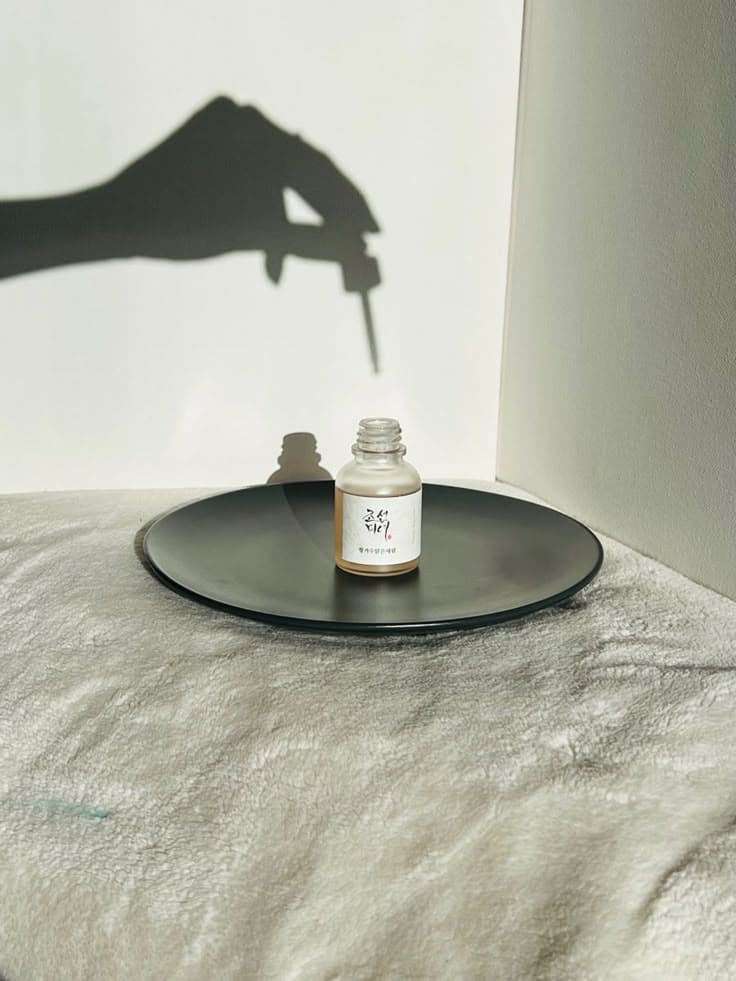
A serum starts as an object. A bottle on a table doesn't mean much to someone who doesn't understand why they need it. A treatment room doesn't mean much to someone who doesn't know what the experience will involve. A moisturiser doesn't become valuable simply because the packaging looks premium. Your social media has to bridge that gap. Show the concern. Explain the problem. Tell the story. Demonstrate the product. Introduce credible people. Show real experiences. Answer questions. Build familiarity. Create trust. Then make the next step clear. That's how something moves from: “I saw this on Instagram.” to: “I think this could actually be useful for me.” And eventually: “I trust this brand enough to try it.” That is where social media starts contributing to a genuine brand relationship.
Don't Just Show People What You Put on Their Skin. Show Them Why They Can Trust You.
A skincare brand can have an exceptional formulation. A clinic can have highly qualified professionals. A beauty company can have a genuinely brilliant product. None of that automatically guarantees trust. Because trust doesn't simply transfer from the product to the Instagram page. You have to build it there. Through the creator you choose. The expert you put in front of the camera. The questions you answer. The experiences you show. The stories you tell. The claims you make. The way you respond to people. The consistency of your brand. And, most importantly, the way your audience feels when they encounter you. Do they feel like you're talking at them? Or do they feel understood? Do they feel like you're exploiting an insecurity to make a sale? Or do they feel like you've identified a concern they genuinely need help with? Do they see another product being pushed into their feed? Or do they see a brand that understands where its product belongs in their life? That's the difference between selling skincare and building a skincare brand. At SocialUp Marketing, that's why we don't start with the product shot. We start with the person looking at it. Who are they? What do they care about? What are they trying to solve? What do they need to know? What would make them believe you? What would make them feel that their money is being respected? From FixDerma's 22-creator, 66-asset UGC ecosystem built around authentic product experiences to Sacred Kosmetics' 10-influencer campaign generating 1 lakh+ collective reach, the underlying principle remains the same: Content has to serve the brand's objective. Not every skincare brand needs the same creator. Not every clinic needs the same content. Not every trend deserves participation. Not every post needs a CTA. And not every beautiful piece of content is useful simply because it looks beautiful. The strongest beauty brands understand that social media isn't merely where customers see their products. It's where customers decide whether they trust them. So don't just show people what you sell. Make them feel visible. Make them feel understood. Show them that you know what you're talking about. Show them that their concerns matter. Show them that their money matters. And give them enough credible reasons to believe that choosing you is the right decision. Because before someone buys your skincare, books your treatment or recommends your beauty brand, there's one decision they make first: “Do I trust this brand enough to let it into my life?” Your social media should make the answer yes.