
















What Happens When Anyone Can Create an Ad?
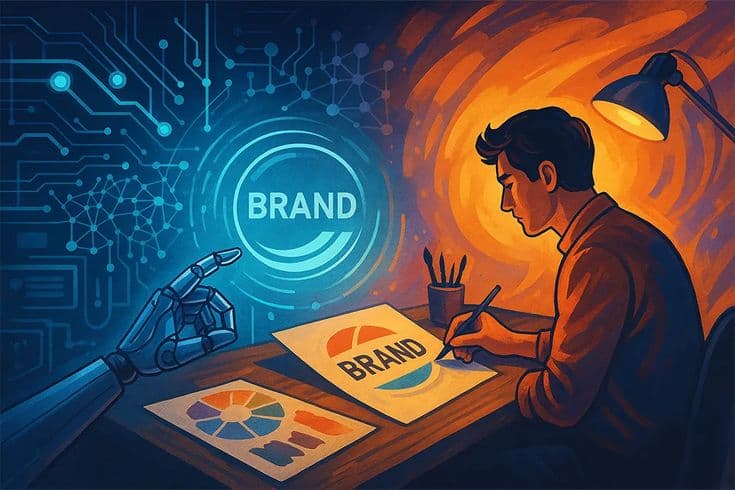
Your next advertisement could be created without a camera, a studio, a creator, a location—or even a human appearing on screen. Give AI a product image, a prompt and a few instructions, and suddenly you can have someone holding the product, demonstrating it, talking about it or living an entire lifestyle around it. It is fast. It is scalable. It can look remarkably polished. And that sounds like a dream for any brand trying to produce more content. But there is one question brands cannot afford to ignore: Does looking real mean feeling real? That is where the conversation around UGC and AI-generated ads becomes far more interesting than a simple debate about which technology is better. Because AI has changed what brands can produce. It has not necessarily changed what audiences want. People still want to understand products. They want to see how something works. They want recommendations they can relate to. They want stories. They want proof. They want to know whether the person speaking actually understands what they are talking about. And sometimes, they simply want to see another human being use a product in a way that feels familiar. That is why the debate shouldn't be reduced to “UGC is authentic and AI is fake.” It is more complicated than that. AI-generated creative can be incredibly useful. UGC can be incredibly powerful. And neither should automatically replace the other. The real question for a brand in 2026 is much more strategic: What does the audience need to believe, understand or feel—and which form of content communicates that best? That question changes the entire conversation.
Why Has AI-Generated Advertising Become So Popular?
Because it solves a very real problem: content production is expensive, time-consuming and complicated. A single traditional campaign can require scripts, locations, creators, photographers, videographers, lighting, styling, equipment, production teams, editing and multiple rounds of approval. And brands rarely want just one piece of content. They want variations. Different hooks. Different formats. Different audiences. Different platforms. Different products. Different angles. A brand may have ten creative concepts it wants to test but only enough time or budget to produce three. AI changes that equation. A concept can be visualised quickly. Multiple creative directions can be explored. Backgrounds can be generated. Visuals can be adapted. Product environments can be changed. Ideas that once required an entire production setup can potentially be explored in a fraction of the time. For brands operating across multiple platforms, that can be extremely valuable. But speed introduces another problem. When everyone can produce more content, producing more content does not automatically make your content better. The internet is already overflowing with videos, images and advertisements. Your audience doesn't need another Reel simply because your brand can now create one in ten minutes. They need a reason to stop. And that reason still comes down to the idea. What is this content saying? Why does it matter? Who is it for? What does the viewer understand after seeing it? What makes them care? AI can make production faster. It cannot make an irrelevant idea relevant. And that distinction is going to become increasingly important as AI-generated content becomes easier for everyone to access.
Is AI Actually Replacing UGC?
Not quite. At least, not in the way many people assume. AI can imitate the visual structure of UGC. It can generate a person speaking to a camera. It can simulate product demonstrations. It can create different settings, characters and scenarios. It can produce something that visually resembles the kind of content audiences have become accustomed to seeing on social media. But UGC isn't valuable simply because a person appears on screen. Its value comes from the human context surrounding the content. A creator understands what it feels like to use a product. They can react to it. They can explain it in their own words. They can demonstrate it naturally. They can tell a story based on an actual experience. They can notice small details that a brand may not have considered. They can explain how a product fits into their lifestyle. And, perhaps most importantly, they can communicate the product from the perspective of another human being rather than directly from the perspective of the company selling it. That distinction matters. Because audiences don't simply process what they see. They interpret who is speaking, why they're speaking and whether they believe what they're saying. AI can reproduce the appearance of a recommendation. UGC can provide the experience behind one. And those are not necessarily the same thing.
What Makes UGC Different From Traditional Brand Content?
UGC—or user-generated content—can reduce the psychological distance between a brand and its audience. Traditional advertising often begins with the company. “Our product does this.”, “Our product has this feature.”, “Our product is premium.”, “Our product is better.” UGC can begin somewhere else. “I tried this because…”, “I've been looking for something that…”, “This is what happened when I…”, “I didn't expect this…”, Now the audience isn't simply being presented with information. They're being invited into an experience. That difference can be incredibly powerful. A skincare product becomes part of someone's morning routine. A fashion product becomes part of getting ready for a wedding. A food product becomes part of someone's day. A technology product becomes part of solving a frustrating problem. The product stops being an isolated object. It becomes part of a story. And storytelling is where UGC can become particularly effective. The creator isn't simply showing the product. They're giving the audience context for why the product exists in their life. That makes it easier for the viewer to imagine the product in theirs.
Does AI-Generated Content Automatically Lack Authenticity?
No. That would be far too simplistic. AI itself isn't the problem. How the technology is used is what matters. If a brand uses AI to create a visual concept, enhance an existing asset, develop creative directions, generate moodboards, explore different settings or experiment with storytelling possibilities, there is nothing inherently wrong with that. In fact, these applications can make the creative process significantly more efficient. The problem begins when AI is used to manufacture an experience that the brand wants the audience to believe genuinely happened. Imagine a beauty brand generates a perfectly polished “customer” demonstrating a skincare product and talking about how much they loved using it—when no such customer exists. Now the question changes. It is no longer simply about creative technology. It becomes a question of transparency and trust. Are you using AI to create content, or are you using AI to create a false experience? Those aren't the same thing. Technology can make something visually convincing. That doesn't automatically make it credible. And as audiences become increasingly familiar with AI-generated content, brands may need to think even more carefully about where the line between creative representation and misleading representation sits.
Can AI Tell a Good Product Story?
It can help create one. But it cannot replace the strategic thinking required to find that story. This distinction is critical. AI can generate possibilities. It can help brainstorm hooks. It can create visual references. It can adapt copy. It can produce variations. It can help teams explore different creative directions quickly. But before any of that happens, someone still needs to understand the product. What does it actually do? Who needs it? Why would they care? What problem does it solve? What makes it different? What objections might the audience have? What does the customer experience? What emotion should the content create? What should someone do after watching? Without those answers, AI can produce something technically impressive but strategically empty. And that brings us back to a fundamental principle of content marketing: A beautiful piece of content can still say nothing. AI simply makes it possible to create that beautiful nothing much faster. That is not necessarily progress. The real advantage comes when technology makes strategic thinking more efficient rather than making strategy unnecessary.
Why Does Human Understanding Still Matter?
Because content doesn't exist in isolation. It exists inside a brand. A brand has a personality. It has a tone. It has a history. It has positioning. It has values. It has an audience. It has products that need to be understood within a specific context. Human creators can contribute to that understanding because they bring their own interpretation of the product. They can explain something naturally. They can describe how something fits into their routine. They can react to a feature. They can make an explanation sound like a recommendation rather than a corporate statement. But even creators need strategy. This is where UGC is sometimes misunderstood. You cannot simply send a product to a creator and say: “Make something.” That's not a content strategy. At SocialUp Marketing, creator selection begins with understanding who the creator is actually suited to communicate with. That includes factors such as audience, lifestyle, aesthetic, speaking ability, screen presence, editing style and, depending on the brand, relevant niche experience. The objective isn't to find the creator with the biggest follower count. It is to find someone who can communicate the brand effectively to the right people. Because you're not simply renting someone's audience. You're asking them to become part of your brand's communication. That makes the fit far more important than the follower count alone.
Is UGC Automatically Better Because It Is Human?
No. And brands need to be careful about this. Human does not automatically mean effective. A creator can be completely real and still produce terrible content. They may not understand the product. They may not know how to communicate. They may lack screen presence. They may speak in a way that doesn't suit the audience. The storytelling may be weak. The product may barely feature. The content may feel forced. So simply saying: “Let's use UGC because it's authentic.” isn't enough. Authenticity without strategy can still produce mediocre content. The creator needs to understand what they're communicating. The brand needs to understand why that creator is being used. The content needs to have a clear purpose. And the execution needs to support that purpose. That is what makes UGC valuable. Not merely the fact that a human being appears in it.
What Does a Creator Bring That AI Can't Easily Reproduce?
Experience. Not just appearance. Imagine a creator saying: “I've been using this for three weeks, and here's the one thing I noticed.” That communicates something very different from: “Here are three reasons you should buy this product.” The second statement sounds like advertising. The first sounds like experience. A creator can also bring small details into a story. The way they use something. The inconvenience they were trying to solve. The feature they unexpectedly liked. The way the product fits into their routine. The reason they kept using it. Those details create texture. And texture makes content feel lived-in. AI can generate a convincing image of a person using a product. But the strategic question remains: What experience is that person communicating? If there isn't one, the visual may look convincing without actually being convincing. That is the challenge brands need to understand. The appearance of experience is not necessarily the same as experience.
So Where Does AI Actually Make Sense?
Quite a lot of places. In fact, dismissing AI entirely would be just as shortsighted as blindly replacing every human creator with it. AI can be extremely useful throughout the creative process. It can help social media teams brainstorm concepts, explore visual directions, generate moodboards, develop initial scripts, experiment with hooks, create references, adapt ideas into different formats and visualise concepts before production. It can also help teams explore several creative possibilities before committing resources to a final production. That is valuable. Imagine a brand wants to test three different visual approaches for a campaign. Instead of producing three complete shoots simply to discover which direction works best, AI-assisted tools can potentially help the team visualise those directions first. That creates efficiency. But efficiency should create more room for strategy, not eliminate strategy. If AI allows a team to explore ten concepts before choosing one, that's useful. If it helps visualise an idea before investing in production, that's useful. If it allows a creative team to quickly develop references for a shoot, that's useful. If it reduces repetitive production work, that's useful. The technology becomes an advantage when it supports human thinking. Not when it replaces human thinking blindly.
Should Brands Use AI to Replace UGC?
Not automatically. The better question is: Why are you using UGC in the first place? If the reason is to create human connection, relatability, product experience and real-world storytelling, replacing it with an AI-generated person may remove the very thing that made the format useful. But if the objective is to visualise an abstract concept, create a specific environment, explore an imaginative scenario or develop something that would otherwise be difficult to produce physically, AI may be the stronger tool. The tool should follow the objective. That is the principle. Not: “AI is new, so we need AI.” And not: “UGC is trending, so we need UGC.” Instead: “What does this piece of content need to accomplish, and what is the strongest way to communicate it?” That is the question worth asking before production begins.
Can AI and UGC Work Together?
Absolutely. And this may ultimately be much more interesting than treating them as competitors. A brand doesn't necessarily have to choose one. AI can support the creative process while human creators bring the content into a real-world context. For example, AI could help develop multiple creative concepts. The team could then identify the strongest idea. A creator could bring that concept to life through an actual experience. The footage could then be edited or enhanced using AI-assisted tools. Additional visual elements could be developed. Variations could be created for different platforms. Now the conversation isn't: AI versus UGC. It is: Human creativity supported by technology. That is a much more realistic future. Technology has repeatedly changed creative workflows without completely eliminating the creative formats that existed before it. Photography didn't eliminate painting. Video didn't eliminate photography. Digital design didn't eliminate physical creativity. AI doesn't necessarily need to eliminate human storytelling either. It can change how stories are produced. The important question is whether the story itself becomes stronger.
Why Should Brands Be Careful About Making AI Content Look Too Perfect?
Because perfection can become suspicious. Social media audiences are surrounded by polished content. Perfect skin. Perfect homes. Perfect lighting. Perfect bodies. Perfect lifestyles. Perfect products. Eventually, perfection can start looking less like reality and more like advertising. That is one reason less-polished content can sometimes feel more compelling. Not because poor production is inherently better. It isn't. But because imperfection can communicate reality. A creator stumbling slightly over a sentence can feel more believable than a flawless synthetic spokesperson. A real environment can feel more relatable than a perfectly rendered room. A genuine reaction can be more memorable than a perfectly generated expression. A creator showing an imperfect but recognisable experience can sometimes create more connection than an advertisement where every frame has been engineered to look flawless. Again, this isn't an argument against quality. It is an argument against confusing polish with credibility. Good production should enhance communication. It shouldn't become a substitute for it.
What Happens When Every Brand Starts Using AI?
This may be the most important question in the entire debate. Imagine a future where every brand can create stunning advertisements instantly. Every brand has perfect visuals. Every brand can produce hundreds of variations. Every brand can generate a new spokesperson. Every brand can make any location look cinematic. Every brand can create almost any visual concept imaginable. What becomes scarce? Humanity. When production becomes abundant, genuine perspective becomes more valuable. When everyone can generate a beautiful image, the idea behind the image matters more. When everyone can create a talking avatar, a real person with something meaningful to say becomes more distinctive. When everyone can produce content quickly, strategy becomes the differentiator. This is why AI may actually increase the value of strong creative strategy rather than reduce it. The technology makes production easier. That means brands need to become better at deciding what deserves to be produced in the first place. The competitive advantage won't necessarily belong to the brand that creates the most. It may belong to the brand that knows what is worth creating.
Does the Audience Care Whether Content Was Made With AI?
Sometimes. Sometimes they don't. If AI is being used for a background, visual enhancement, creative assistance or conceptual development, the audience may not care at all. But if the entire selling point depends on an apparently real person having an experience that never happened, the situation changes. Transparency becomes important. Brands need to consider the expectations they've created. If you're presenting something as a genuine customer experience, it should actually be one. If you're creating a fictional concept, that's different. The issue isn't simply whether AI was involved. The bigger question is whether the content is misrepresenting reality in a way that affects trust. And trust is something brands cannot afford to treat casually. A visually convincing advertisement may get the click. But if the audience later discovers that the “experience” was manufactured, the brand may have created a much bigger problem than the advertisement was worth.
Why Is Brand Identity Still More Important Than the Tool?
Because tools change. Your brand shouldn't have to rebuild its identity every time a new technology appears. The same brand should remain recognisable whether its content is created through a studio shoot, UGC, animation, AI-assisted design or a combination of formats. The medium can change. The identity shouldn't disappear. This becomes especially important when brands experiment with AI because the technology can make almost anything possible. But just because you can create something doesn't mean you should. A luxury brand shouldn't suddenly look like a gaming brand because AI makes neon visuals easy. A heritage fashion brand shouldn't abandon its visual language because futuristic imagery is trending. A serious professional brand doesn't need to become quirky simply because AI can generate funny content. The question remains: Does this belong to us? If it doesn't, don't use it. Technology should expand your creative possibilities. It shouldn't erase your positioning.
How Should Brands Decide Between UGC and AI?
Start with the audience. Then understand the product. Then define the objective. Then determine what the story needs to communicate. Only after that should you decide how the content should be created. If the content needs genuine experience, relatability and human demonstration, UGC may be the stronger choice. If it needs visual experimentation, concept development or something difficult to produce physically, AI may be useful. If the brand needs both, combine them. There is no prize for choosing the newest technology. There is also no prize for refusing to use it. The strongest brands will be the ones that know when each tool makes sense. That is where strategy comes in.
What Does SocialUp Marketing Believe About AI and UGC?
At SocialUp Marketing, we don't see AI and UGC as a simple battle where one has to win. Our approach begins much earlier. We first understand the content requirement. Then we understand the brand. The product. The audience. The campaign objective. And the kind of output the brand is actually looking for. Only then do we determine what creative approach makes sense. If UGC is the right fit, the creator needs to be selected strategically. If AI can strengthen the creative process, it should be used intelligently. If neither is appropriate, there is no reason to force either one into the campaign. Because the goal isn't to say: “We use AI.” Or: “We use UGC.” The goal is to be able to say: “We know why we're using this.” That distinction matters. Technology can produce content. Strategy decides which content deserves to exist.
Can UGC and AI Be Evaluated Using the Same Metrics?
Not necessarily. Because the objective may be different. A UGC video designed to demonstrate how a skincare product feels in a real routine should not necessarily be judged by the same criteria as an AI-generated visual designed to introduce a new campaign concept. The first may need to generate product understanding, saves, shares, profile visits or purchase intent. The second may be designed primarily to attract attention, establish a visual world or test a creative direction. That means brands need to look beyond surface-level engagement. Ask: Did people watch? Did they stay? Did they understand the message? Did they visit the profile? Did they click? Did they ask questions? Did they save the content? Did they share it? Did they inquire? Did they eventually take the desired action? Most importantly: Did the content accomplish what it was created to accomplish? This is why content performance cannot be separated from content strategy. A tool can help produce the asset. The objective determines whether the asset was successful.
What Happens When Brands Choose Technology Before Strategy?
They start producing content simply because they can. AI can generate a person. So they generate a person. AI can create a luxury environment. So they create one. AI can create cinematic product shots. So they create ten. UGC creators are available. So they send products to creators. Suddenly, the brand has a lot of content. But it doesn't necessarily have a stronger marketing system. This is one of the biggest risks of having more creative tools. Accessibility can create noise. If there is no strategic filter, brands can become obsessed with production instead of communication. The question shouldn't be: “What can we make?” It should be: “What should we make—and why?” That small shift can save brands enormous amounts of time and money.
Why Does the Product Still Come Before the Format?
Because no content format can compensate for poor product understanding. Before choosing UGC, AI, influencer content, studio production or anything else, the team needs to understand what is actually being sold. What problem does it solve? What does the customer value? What makes it different? What objections exist? What does the customer experience after purchase? What needs to be demonstrated? What needs to be explained? What needs to be believed? The answers determine the content. For example, if a product has a complicated mechanism that customers struggle to understand, demonstration may matter more than aesthetics. If the product is highly lifestyle-driven, relatable creator content may be more effective. If the product has an unusual visual concept that is difficult to produce physically, AI could help communicate it. The format should be a consequence of the strategy. Never the starting point.
Why Does the Human Element Matter Even More in an AI-Heavy Internet?
Because audiences don't form emotional connections with production tools. They connect with people, experiences, stories and ideas. A creator can tell you: “I had this problem too.” A founder can explain: “This is why we built the product.” A customer can say: “This is how I use it.” A brand can demonstrate: “This is what makes it different.” Those statements carry meaning because there is context behind them. As AI-generated content becomes increasingly sophisticated, that context may become even more valuable. The internet may become visually easier to impress and psychologically harder to convince. That means brands need to think beyond: “Can we make this look real?” They need to ask: “Can we make this feel meaningful?” That is a much harder problem. And it is one technology alone cannot solve.
Is the Future Really UGC Versus AI?
No. That framing is already too narrow. The future is likely to involve brands using multiple creative tools depending on the situation. A campaign might begin with human research. AI might help brainstorm concepts. A strategist might identify the strongest angle. A creator might bring it into a real-world environment. AI-assisted editing might help produce variations. A designer might refine the final assets. Performance data might reveal which version resonates. The team might then develop the next round based on what was learned. That's not one technology replacing another. That's a creative ecosystem becoming more sophisticated. The brands that understand this will have an advantage. Not because they use more technology. Because they know how to integrate technology without losing the human thinking behind the work.
What Should Brands Actually Choose in 2026?
The answer is not UGC. It isn't AI. And it certainly isn't whichever format happens to be trending this month. Choose the format that best serves the audience, the product, the objective and the brand. Choose UGC when human experience is the value. Choose AI when creative exploration, visualisation or production efficiency is the value. Combine them when both contribute something meaningful. Avoid both when neither solves the actual communication problem. That last point matters. Sometimes the smartest strategy is not using the newest tool at all. Because innovation isn't about using everything available. It is about knowing what deserves to be used.
The Future Isn't UGC Versus AI. It's Strategy Versus Noise.
In 2026, brands have more creative possibilities than ever before. That sounds like an advantage. It is. But it also creates a new problem. When everyone can create more, faster, the internet becomes even more crowded. And when the amount of content increases, attention becomes harder to earn. That means brands cannot rely on production capability alone. They need ideas. They need stories. They need an understanding of their audience. They need a strong grasp of their product. They need people who can communicate. They need brand integrity. And they need the discipline to say no to content that doesn't serve a purpose. UGC isn't valuable simply because it has a human face. AI isn't valuable simply because it is new. Both are tools. One can bring human experience into a story. The other can expand what is creatively possible. And the smartest brands won't ask: “Which one is going to replace the other?” They'll ask: “What does our audience need from us right now—and what is the strongest way to give it to them?” Because audiences don't fall in love with technology. They don't connect with a tool. They connect with stories, experiences, ideas and people. AI can help you create those things. UGC can help you communicate those things. But neither can replace the strategy that decides what the audience should see in the first place. The future of content isn't human versus artificial. It is strategic versus forgettable. And when content becomes easier for everyone to produce, the brands that understand what is actually worth producing will be the ones people remember.